
Trademark Class 29: Food, Meat, Dairy and Eggs
Class 29 covers meat, dairy, eggs, and processed foods. Iowa and Texas food producers: learn what to trademark, common mistakes, and how to file.
March 20, 2026
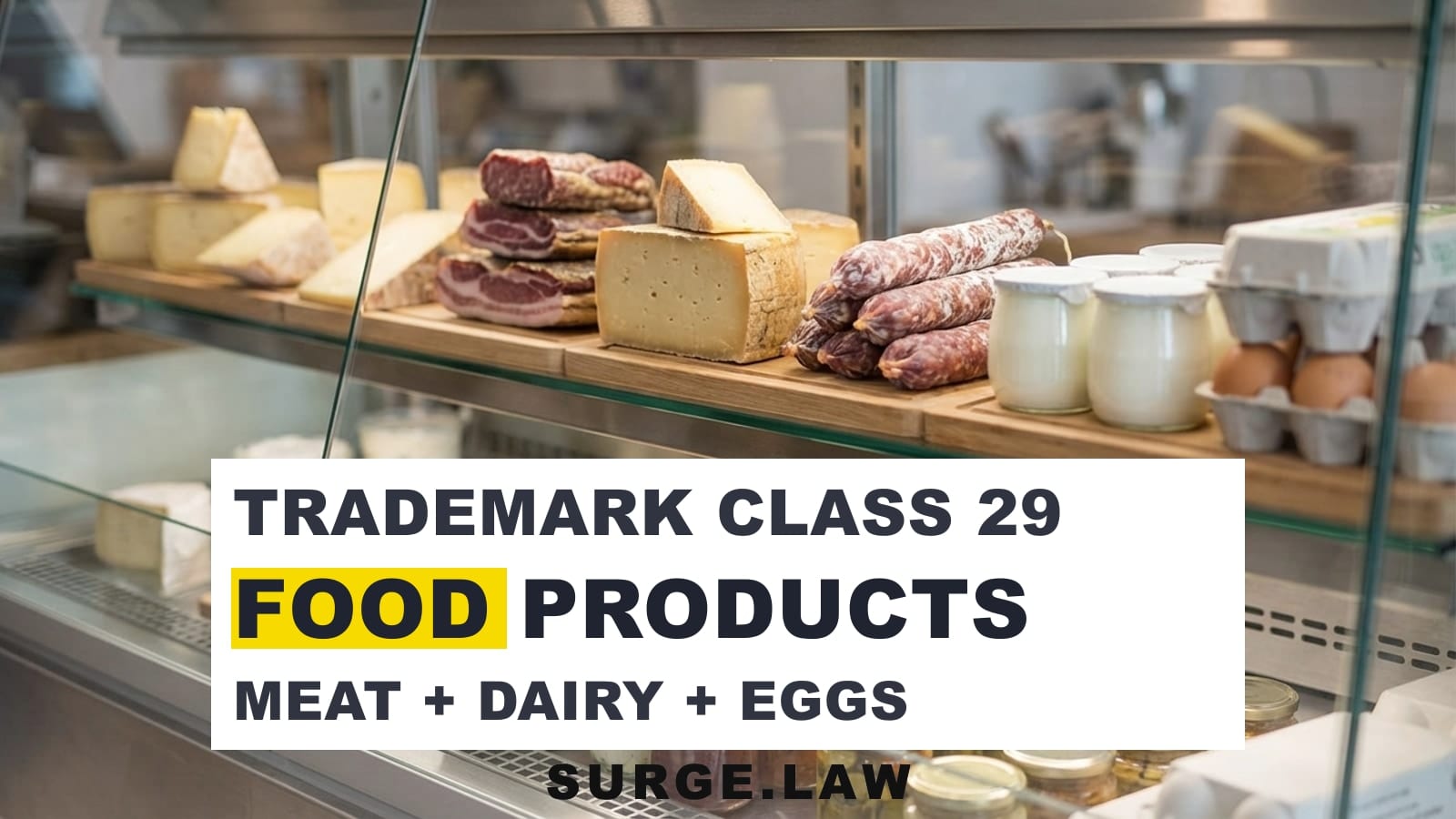
If you produce meat, dairy, eggs, canned goods, or specialty food products, your brand name deserves protection. International Class 29 is the trademark category that covers most processed and preserved foods, and getting it right from the start can mean the difference between owning your brand and losing it to a competitor who filed first.
What Does Trademark Class 29 Cover?
Trademark Class 29 is one of the most important categories for food producers. It covers a wide range of products that have been processed, preserved, or prepared for consumption. Specifically, Class 29 includes:
- Meat and poultry products: beef, pork, chicken, turkey, sausages, deli meats, jerky, and similar products
- Fish and seafood: fresh, frozen, smoked, or canned fish and shellfish
- Dairy products: milk, cheese, butter, cream, yogurt, and ice cream
- Eggs: fresh eggs, liquid eggs, dried egg products, and egg substitutes
- Preserved and processed fruits and vegetables: canned, frozen, dried, pickled, or otherwise preserved produce
- Cooking oils and fats: vegetable oils, lard, shortening, and similar products
- Prepared protein-based foods: tofu, meat analogs, and similar items
- Soups and broths: canned, carton, or powdered soups made from meat or vegetables
- Chips and snacks derived from vegetables: such as potato chips and vegetable crisps
The common thread across Class 29 products is that they involve animal-based or plant-based food that has been changed from its raw natural state through processing, preservation, or preparation. If your product has been cooked, cured, fermented, canned, frozen, or refined, Class 29 is likely where your trademark belongs.
If your product has been cooked, cured, fermented, canned, frozen, or refined, Class 29 is likely where your trademark belongs.
What Class 29 Does NOT Cover
Just as important as knowing what Class 29 includes is knowing what it excludes. Filing in the wrong class is one of the most common and costly trademark mistakes food producers make.
- Fresh, unprocessed produce (Class 31): Live animals, raw fruits, and vegetables that have not been processed belong in Class 31, not Class 29.
- Restaurant and food service (Class 43): If your brand is associated with preparing and serving food to customers rather than selling packaged products, Class 43 covers those services.
- Baked goods, coffee, and spices (Class 30): Bread, pastries, pasta, coffee, tea, condiments, and spices fall under Class 30. A barbecue sauce brand, for example, belongs in Class 30, not Class 29.
- Beverages (Class 32 or 33): Non-alcoholic drinks like juice and soda fall in Class 32; alcoholic beverages other than beer are in Class 33.
- Dietary supplements (Class 5): Nutritional supplements sold as health products, rather than as food, typically land in Class 5.
Many food businesses sell products that span multiple classes. A company that sells both a fresh salsa (Class 30) and a line of pickled peppers (Class 29) may need to file in both classes to fully protect the brand. Understanding these boundaries early saves time and money later.
Ready to figure out which trademark classes your food brand needs? Book a free consultation with Surge Business Law and we will map out the right filing strategy for your products from the start.
Who Needs a Class 29 Trademark?
Class 29 covers a broad range of food businesses. You likely need a Class 29 trademark if you are:
- A meat processor or packer: If you sell branded cuts, sausages, cured meats, or smoked meats under a name or logo, that brand needs trademark protection in Class 29.
- A dairy producer or creamery: Whether you sell cheese, butter, yogurt, or specialty dairy items at farmers markets or through retail distribution, your brand is a valuable asset worth protecting.
- An egg producer: Farm-brand eggs have become a distinct product category, especially as consumers seek out local and pasture-raised options. A registered trademark prevents other producers from using a similar name or carton design.
- A canning or jarring operation: Preserved fruits, vegetables, jams, jellies, and pickled goods sold under your label all fall within Class 29.
- A specialty food maker: Artisan food producers creating lard, rendered fats, bone broth, or dehydrated food products benefit from trademark protection as their distribution expands.
- A frozen food brand: Frozen vegetables, frozen entree components, and frozen meat products all belong in Class 29.
The right time to file is before you scale. Waiting until you are in wide retail distribution means you have already built brand equity without the legal protection to defend it. See our trademark registration services to learn how the process works.
Iowa Food Brands and Class 29
Iowa sits at the center of American food production. The state ranks among the nation's leading producers of pork, beef, dairy, and eggs, making it one of the most important agricultural economies in the country. That scale creates both opportunity and risk for Iowa food brands.
When a small or mid-size Iowa food producer builds a recognizable brand, competitors take notice. Without a registered trademark, another business can adopt a similar name or logo and there is very little you can do about it in federal court. Trademark registration gives Iowa food producers the nationwide priority date and legal presumption of ownership that makes enforcement possible.
Iowa food brands are also increasingly moving beyond local farmers markets into regional grocery chains, online retail, and national specialty food platforms. That expansion crosses state lines, which is exactly when federal trademark registration becomes essential. A registration on the Principal Register provides protection across all 50 states, not just Iowa.
Our firm serves Iowa food producers directly, and we understand the agricultural economy here. Whether you are a hog operation launching a branded charcuterie line or a small dairy selling artisan cheese at the Iowa State Fair, your brand deserves the same protection as any national food company. Learn more about our services for Iowa businesses.
Texas Specialty Food Brands and Class 29
Texas has its own thriving specialty food economy, and Class 29 is just as relevant for Texas producers. Central Texas in particular has a strong tradition of smoked and processed meats, artisan charcuterie, and locally sourced dairy products.
Texas specialty food makers face a competitive market where brand identity is a key differentiator. A barbecue brand that sells packaged smoked brisket or pre-seasoned proteins for retail falls squarely in Class 29. The same is true for Texas-based egg producers, goat cheese creameries, and dehydrated or freeze-dried food companies serving the outdoor and emergency preparedness markets.
As Texas specialty food brands expand into national retail, protecting the brand through federal trademark registration becomes critical. Filing before you reach broad distribution protects your priority date and prevents a competitor who files later from claiming your market position.
Surge Business Law serves both Iowa and central Texas food businesses. Our flat-fee trademark pricing makes it straightforward to understand the cost of protection upfront, with no billing surprises.
Common Class 29 Mistakes
Food producers making their first trademark filing often run into the same avoidable problems. Here are the most common mistakes we see:
- Filing only one class when selling both processed and fresh products: A producer who sells both raw, unprocessed produce (Class 31) and canned or jarred versions of those products (Class 29) needs coverage in both classes. Filing in only one leaves part of the brand unprotected.
- Using geographic names that cannot be trademarked: A name like "Iowa-style" or "Central Texas" as a standalone brand descriptor is nearly impossible to register because geographic terms are generally not protectable as trademarks. Build your brand around a distinctive name that does not rely on a location descriptor.
- Waiting until retail distribution to file: By the time your product hits store shelves, you have already spent months or years building brand recognition. Filing at that point means your priority date is late, and another producer in a different state may have already claimed the same name in the USPTO database.
- Not understanding specimen requirements for food packaging: The USPTO requires a specimen showing your mark in actual commercial use. For food products, this typically means a photo of the label or packaging on the actual product. A mockup or design file will not be accepted. Submitting the wrong specimen causes delays and additional USPTO fees.
- Assuming a business name registration is the same as a trademark: Registering your business name with the Iowa Secretary of State or the Texas Secretary of State gives you the right to operate under that name in the state. It does not give you trademark rights. Federal trademark registration is a separate process through the USPTO.
- Ignoring the identification of goods description: The way you describe your goods in the trademark application must be specific and accurate. An overly broad or inaccurate description can lead to a USPTO refusal or a registration that does not actually cover your products.
How Surge Business Law Can Help
Trademark law for food products involves more nuance than most producers expect. Choosing the right class or classes, writing an accurate identification of goods, and navigating the USPTO examination process all require careful attention to detail. Getting it wrong can cost you your filing fee and your filing date.
Surge Business Law helps Iowa and central Texas food producers register trademarks with confidence. We handle the full process from clearance search through registration, at a flat fee so you always know what you are paying. We are a small business law firm, and we work with the kind of producers, makers, and entrepreneurs who are building real brands in real communities.
If you are ready to protect your food brand, contact Surge Business Law today to book a free consultation. We will walk through your products, identify the right classes, and give you a clear path to registration.