
Trademark Class 30: Coffee, Baked Goods, and Spices
Learn what International Class 30 covers, who needs it, and common filing mistakes for food brands selling coffee, baked goods, spices, sauces, and condiments.
March 20, 2026
What Is International Class 30?
When you apply to register a trademark with the United States Patent and Trademark Office, you have to identify which class of goods or services your brand covers. The USPTO uses an international classification system with 45 classes. Class 30 is one of the broadest food-related classes and covers a wide range of processed and packaged staple foods.
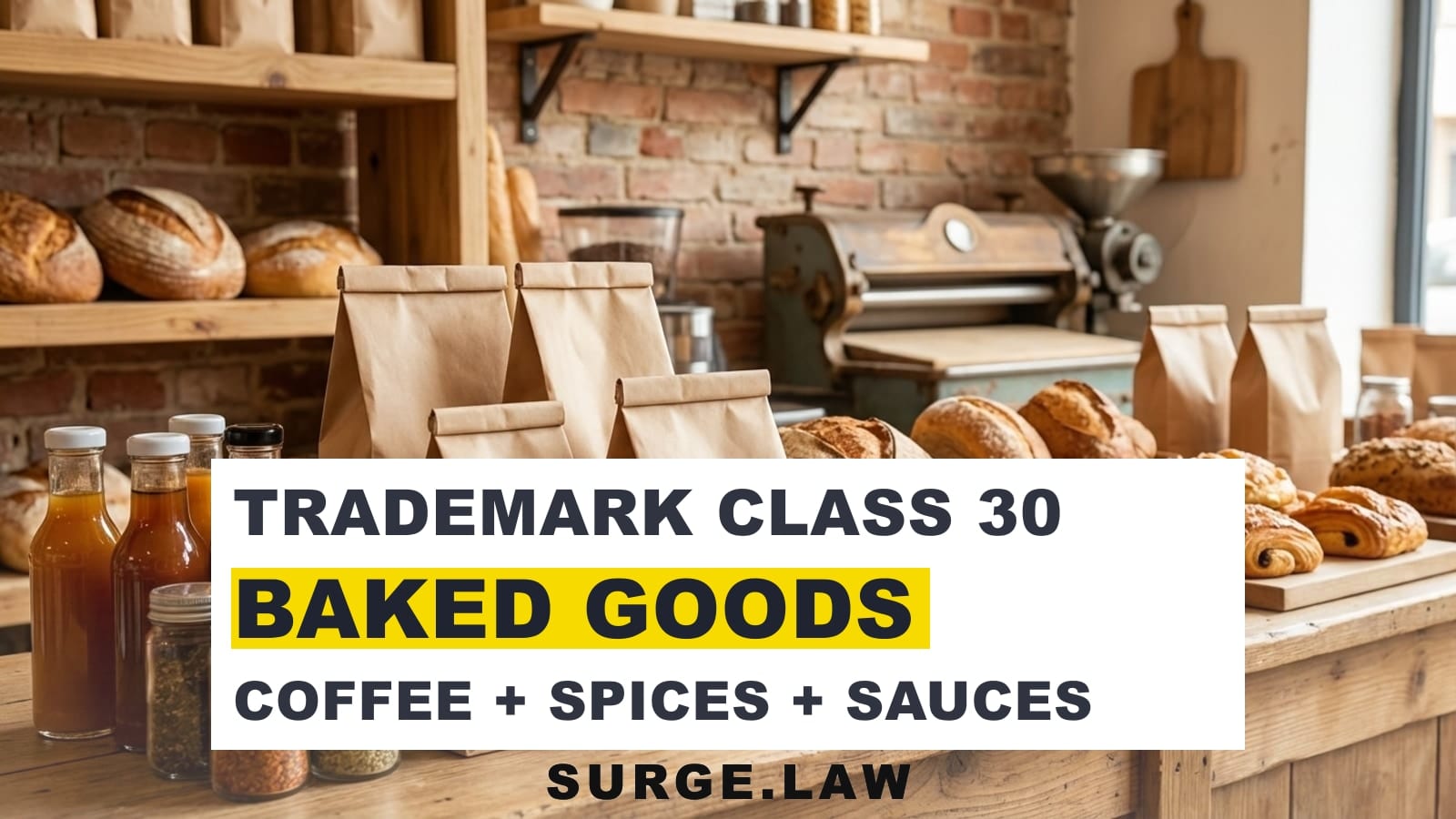
Class 30 includes coffee, tea, cocoa, sugar, flour, bread, baked goods, pasta, rice, spices, salt, vinegar, condiments, sauces, mustard, mayonnaise, confectionery, candy, chocolate, ice cream, frozen desserts, and pizza. If your brand appears on any of those products, Class 30 is almost certainly where your trademark registration needs to live.
- Coffee, tea, cocoa, and drinking chocolate
- Roasted, ground, instant, or blended products sold under a brand name, including drinking cocoa mixes and packaged loose-leaf or bagged tea.
- Baked goods, bread, and pasta
- Packaged breads, pastries, cookies, crackers, dried pasta, and flour-based products sold at retail or online.
- Spices, sauces, and condiments
- Spice blends, seasoning rubs, hot sauce, barbecue sauce, salsa, mustard, mayonnaise, and vinegar-based condiments in retail packaging.
- Confectionery and frozen desserts
- Candy, caramel, fudge, chocolate products, ice cream, and frozen desserts moving into retail packaging beyond a scoop shop.
The class also covers yeast, baking powder, and other products used in food preparation. In short, Class 30 is the home for most shelf-stable and packaged food staples that people buy at a grocery store, farmers market, or online shop.
What Class 30 Does NOT Cover
Understanding what falls outside Class 30 matters just as much as knowing what is inside it. Filing in the wrong class means your mark offers no protection for the products you actually sell.
- Meat, fish, poultry, and dairy products: fall under Class 29, not Class 30. If your brand covers jerky, cured meats, cheese, butter, or yogurt, you need Class 29.
- Fresh produce and raw agricultural goods: belong in Class 31. If you sell fresh fruits, vegetables, or live plants, look to Class 31.
- Non-alcoholic beverages and beer: are covered by Class 32. If you bottle and sell a ready-to-drink coffee beverage or a carbonated drink, you may need Class 32 in addition to or instead of Class 30.
- Restaurant and food service: is classified under Class 43. A bakery that sells baked goods at retail uses Class 30. A restaurant that serves food to customers on the premises uses Class 43. Many food businesses need both.
Getting these distinctions right at the filing stage saves time and money. If you are unsure which class fits your product line, a quick conversation with a trademark attorney can clarify the right path before you spend money on the wrong filing.
Who Needs a Class 30 Trademark?
Class 30 is relevant to a wide range of food entrepreneurs and established brands. You likely need a Class 30 trademark if you fall into one of these categories.
- Coffee roasters: who sell bagged or canned coffee under a brand name, whether direct-to-consumer, through retailers, or online.
- Artisan bakeries: that package and sell bread, pastries, cookies, or other baked goods beyond walk-in retail sales.
- Spice and seasoning brands: that blend and sell spice mixes, rubs, or seasoning blends under a distinct label.
- Sauce and condiment makers: selling hot sauce, barbecue sauce, salsa, mustard, or specialty condiments in retail packaging.
- Pasta and grain producers: who sell branded dried pasta, rice, or flour products.
- Confectionery and chocolate brands: selling candy, caramel, fudge, or chocolate products.
- Ice cream and frozen desserts: companies that are moving into retail packaging beyond a scoop shop.
- Tea blenders and cocoa brands: selling packaged loose-leaf tea, tea bags, or drinking cocoa mixes.
If you are building any of these brands and you have not yet filed a trademark, the time to act is before a competitor files first. Once another company secures registration for a similar name in your product category, you may be forced to rebrand entirely. That cost far exceeds the cost of registering early.
The time to file a trademark is before a competitor files first. Once another company secures registration for a similar name in your product category, you may be forced to rebrand entirely. That cost far exceeds the cost of registering early.
Ready to protect your food brand? Book a free consultation with Surge Business Law to find out which class or classes fit your products and what registration will cost. Our flat-fee trademark pricing makes it easy to budget for protection from the start.
Iowa and Texas Class 30 Examples
The food brand landscape in Iowa and central Texas is filled with exactly the kind of businesses that need Class 30 protection.
Iowa has a thriving small-batch food production scene. Artisan bakers at farmers markets across Des Moines, Cedar Rapids, and Iowa City are packaging breads, granolas, and specialty baked goods for retail sale. Small-batch coffee roasters in the Corridor and across eastern Iowa are building loyal followings under distinctive brand names. Spice and seasoning brands are emerging from Iowa's agricultural roots, turning regional flavors into retail products. These producers often underestimate how quickly a brand can grow and how important early trademark registration is for protecting that growth. Our Iowa business law services are built for exactly these kinds of food entrepreneurs.
Central Texas presents an equally strong case for Class 30 filings. Texas barbecue sauce brands, dry rub makers, and specialty condiment producers are some of the most competitive food brand categories in the country. A distinctive Texas-style hot sauce or smoked seasoning blend can go from a local favorite to a nationally distributed product within a few years. At that scale, an unregistered brand is a serious liability. Competitors can copy your name, distributors may hesitate to carry an unprotected brand, and investors will ask about your IP before they write a check. If you sell BBQ sauce, hot sauce, or Texas-style condiments and your brand is not yet registered, you are taking on unnecessary risk.
Both states also have a strong tradition of specialty food gifting, food-focused e-commerce, and regional food tourism, all of which increase the likelihood that a small brand name travels beyond its home market quickly. Once your brand crosses state lines, you are operating in interstate commerce and your trademark registration becomes even more valuable.
Common Class 30 Mistakes
Food brands make a handful of predictable trademark filing mistakes. Knowing them in advance can save you from a costly do-over.
- Descriptive or geographic terms: Names like "Fresh Iowa Bread" or "Texas Hot Sauce" are likely too descriptive or geographically misdescriptive to function as registered trademarks. The USPTO will refuse marks that merely describe the product or its origin. Choose a name that is distinctive, suggestive, or fanciful.
- Logo only, no word mark: Many food brands design a logo and file for that design alone. But if someone copies your brand name in a different font or without your specific graphic elements, your logo registration may not protect you. Filing both the word mark and the logo separately gives you broader coverage.
- Filing too late: USPTO registration is largely first-come, first-served within a product category. If a competitor files for a confusingly similar name in Class 30 before you do, you may be blocked from registering your own mark, even if you have been using it longer. Use-in-commerce rights matter, but a registered mark is much stronger and easier to enforce.
- Confusing Class 30 and 43: A bakery that sells packaged cookies needs Class 30. A bakery cafe where customers sit and eat needs Class 43. Many food businesses need registrations in both classes. Filing only in Class 30 when you also operate a cafe, food truck, or catering service leaves part of your brand unprotected.
- State registration only: State trademark registrations only protect you within one state. A federal USPTO registration gives you protection across all 50 states and is required before you can sue in federal court for infringement. If you ever plan to sell outside your home state, including through an online store, federal registration is the right move.
- Skipping the clearance search: Launching a brand without a proper trademark clearance search is one of the most expensive mistakes a food entrepreneur can make. If you build brand equity under a name that turns out to be already taken, you face a cease-and-desist letter, potential litigation, and a forced rebrand. A clearance search before you invest in packaging, labels, and marketing is well worth the cost.
How Surge Business Law Can Help
At Surge Business Law, we work with food entrepreneurs, artisan producers, and small-batch brands across Iowa and central Texas. We handle trademark registration on a flat-fee basis, so you know exactly what you are paying before we start. There are no billing surprises and no hourly invoices to dread.
Our process starts with a clearance search to make sure your name is available. From there, we prepare and file your application, monitor it through the examination process, and respond to any USPTO office actions that come back. We also help you think through whether you need one class or several, whether you should file for your word mark, your logo, or both, and how to build a trademark portfolio that grows with your business.
Whether you are a coffee roaster in Iowa City, a hot sauce maker in Austin, or a specialty spice brand selling online across the country, we are here to help you protect the brand you are building. Book a free consultation today and let us walk you through the right trademark strategy for your food business.